Remnants, leftovers, discarded, and forgotten; each word, to most folks, represents a negative thought.
Washington County, Maine, the undisputed wild blueberry epicenter of the universe, in my mind, has been picked clean of its antioxidant-rich fruit.
Almost.
Human rakers, sweaty, flesh-covered laborers, are few and far between in the modern era. Sure, on smaller fields and family-owned property, they are still important cogs in the berry box.
The land is predominantly machine-picked now. Huge tractors, off-road-centric forklift-equipped heavy equipment, and eighteen-wheelers park on dusty roads, waiting to be filled to the double back doors with bins burgeoning with tiny berries.
Machines are efficient, but they are not perfect.
Humans are not perfect either—of course they aren’t.
But at another time, the blueberry bushes, a scant few still heavy with fruit, hanging over the abutting, water-eroded drop-offs lining hundreds of miles of rough, rocky gravel roads to nowhere in particular, would have been cleaned out by people trying to fill the last box of the day, adding a few more dollars to their wages.
Those berries were money, cash for school clothes, new sneakers, gas, and the upcoming winter’s heating oil deliveries. Oh, probably some wreath-making supplies, too.
While one hand often washes another, one dollar can make three if put in the hands of a crafty, oft basement-bound Washington County woman with Christmas money in mind. The balsam boughs are another cash crop that kept the larders full on the rock-bound coast of Maine.
Like in all parts of our life, the edges hold treasure often unseen and ignored.
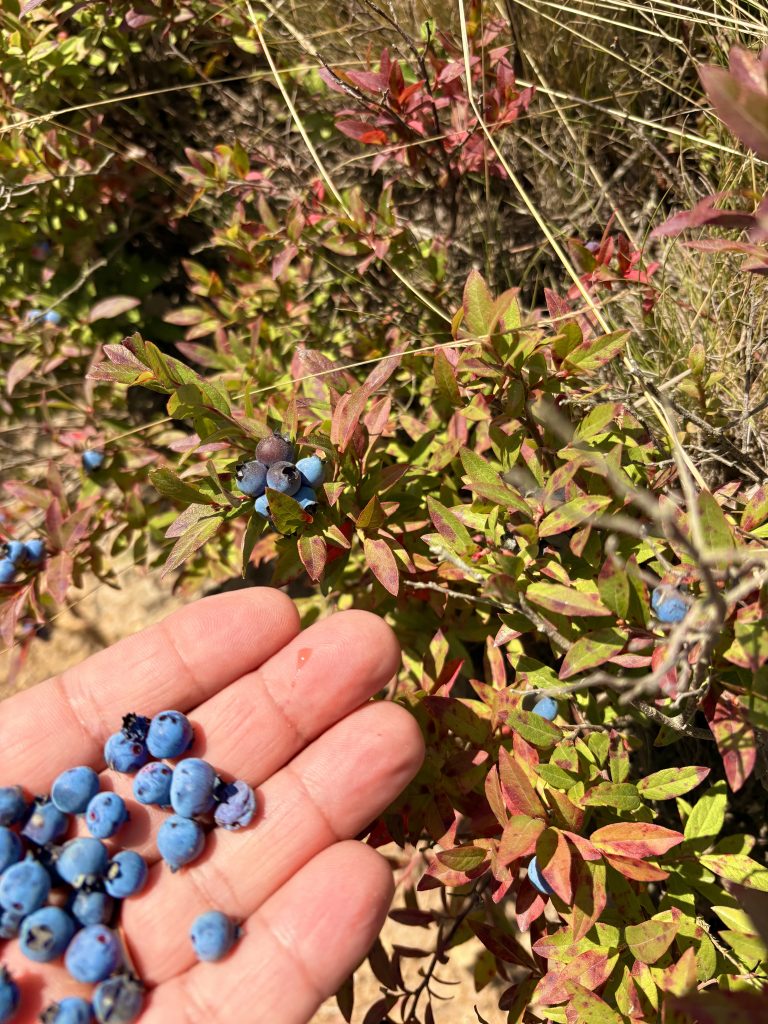
Overlooked, inaccessible to diesel-powered, grease-stained devices, the remaining blueberries wave goodbye in gentle summer winds, some rustled by the breeze concocted by passing pickup trucks bound for somewhere else.
In the evenings from now until the last berries dry and drop, whitetail deer and all kinds of fur-bearing critters, including black bears, their fur appearing almost dark blue in fading light, will clean up what’s left.
Well, I might stop to grab a handful, just to get that field-to-table feeling of picking and eating without rinsing or washing. The residual coating of dust adds a gentle flavor profile like no other, or so says Bill G., my camp neighbor.
Remnants, leftovers, discarded, and forgotten; each word, to most folks, represents a negative thought. That’s not always the case.
Keep your hands to yourself, leave other people’s things alone, and be kind to one another.
From the Jagged Edge of America, I remain,
Just TC
Thanks for reading the stuff. If you find the worlds worthy of support through BUYMEACOFFEE, feel free. The blog and Facebook posts remain—always—free to read, and get directly into your email if you sign up for the missives here on my website. Thanks to all of those who do support the writing, and thank you to those of you who take the time to read the things I pen. Regardless of the little details, I appreciate all of you. TC