Pie
Now, it’s just me and the pie.
It didn’t start that way, of course. It came as a gift from the Significant One.
I mentioned apple pie, sure. I’ve never made one, and I’m not starting now. A man needs to know his limitations.
When she showed some passing interest in the idea, I put on a little more pressure. Then, she showed up with a bag of apples. My low-key campaign had a winner—me.
Then, I pushed the envelope. I can be too much. I am a small-dose kind of guy. I’m fun, but I’ve seen people’s faces when they feel I have an agenda or when I plan to stick around long beyond the original plan.
I felt myself recoil— slightly— when I said it.
“Could we have crust from scratch?” I winced, looking away, knowing I might have crossed the line. I felt dirty for asking. She was only in town for thirty-six more hours. She had other things to do, too.
As I squinted, slightly blinking my eyes like an old dog who knows he shouldn’t have been on the furniture when the folks walked in unannounced, I heard her say, “I’ll make a good crust for you.”
The following words then slipped through my lips, “Like your mother’s?”
I felt like I’d said George Carlin’s seven dirty words that you couldn’t say on television. Don’t look them up. Things have changed, and everyone uses them on television now.
I waited for her answer for what seemed like a lifetime. Instead of feeling the impact of a rolled-up newspaper, I watched her going through the cupboard, searching for the essential ingredients.
“That would be good, wouldn’t it?”
I felt the weight of the world lift from my shoulders. Sometimes you say the right thing the wrong way or the wrong thing the right way; this this was the latter.
“Maybe we can have Sammy over; he likes pie.” I was getting cocky.
“We should; we certainly can’t eat a whole pie by ourselves.”
When you have pie, you shouldn’t eat it alone. Two people? Yes, but you need more. Add a third, and you have a reasonable crowd for pie.
Herein lies my dilemma. The pie is fantastic. Sammy came for dinner. We had pie. The Significant One pulled her famous disappearing trick the following day, leaving on a jet plane.
That leaves me and the pie—alone. She placed it in the 70s-inspired Tupperware pie vault. It gives me good feelings of pie days gone by.
My mom had a Tupperware pie container. Mom had Tupperware for every single food group.
I don’t think we ever had the single-slice Tupperware traveling pie containers, but I’ve seen them. There were enough of us in the house so that no single slice of pie was ever left behind, let alone enough left to take to school like the smug kids with the single-serving pie containers from Tupperware; they had small families.
No, I am not having company over for more pie, and I shouldn’t be eating the pie for breakfast. Again.
Pie, every day, is a beautiful thing, but it’s not a good idea. However, I cannot let good pie go to waste, especially with a homemade crust like her mother’s.
Instead, I am slowly eating the pie directly from the glass pie plate—two to four bites at a time. Don’t judge me; I try to eat it properly in a symmetrical fashion by taking diagonal cuts with my fork. It doesn’t matter; no one else is coming by for pie.
Oh, I could have gone in hard and just taken bites from the middle, but I’m a guy who thinks pie should come out of the plate in wedges, even when I am doing it with a fork sans knife.
So that’s my story. I’m now five and a half days into the pie. I’ll get through it. I’ve skipped lunch for pie twice, and I sneak intermittent bites late at night before I take out the dog. I’ll admit I’ve had an extra bite or three when I bring her back inside after going out. That’s why I leave the fork on the edge of the sink for a few minutes before placing it in the basin to wait for a wash.
For now, it’s just me and the pie.
It’ll be gone by Saturday.
From the Jagged Edge of America, I remain,
TC
Cleaning Windows
With Lewiston, Maine, on the hearts and minds of a whole nation, we’ve experienced some heartfelt celebrity outreach in recent days.
Pro footballers from the New England Patriots gave shout-outs of support to the Lewiston Blue Devils and City of Auburn Red Eddies high school football teams. It all took place before the cross-river rivals took the field while trying to get back to the business of life after the tragedy of the horrific mass shooting a week ago. Heck, Will Ferrell even piped into the conversation.
For a city and its people, it’s reassuring to be noticed by kind and talented people.
James Taylor showed up with his guitar to sing the national anthem. That’s a magical thing. Delivering a small dose of happiness to an entire city cannot be discounted in such horrific times.
Prominent names with big personalities have gone to war zones, raised money for important causes, and provided the service of giving people smiles when they need them the most. We need them, and we appreciate their support.
It’s not what I write about, though.
As a tiny speck on this globe, I am elated to highlight the little things.
My kid is a Maine State Police detective, and in his role, he was sent, like so many cops, to respond to Lewiston amid the tragedy and subsequent search for the murderer of eighteen loved Mainers.
Cops from all over Maine showed up. It’s what first responders do.
Maine is vast, and the jokes about lone travelers getting the advice that “you can’t get there from here” when receiving directions from a stoic Mainer are steeped in truth.
My son had a long drive from Maine’s Canadian border to get to the spot where he needed to be. At the start of his shift that night, he had no idea that he’d be heading southbound for two hundred fifty miles, and of course, he had to stop once for fuel at a convenience store. He found one just off an Interstate off-ramp.
During a quick pit stop in one of Maine’s well-policed small towns, he ran into another young cop working his own night shift. By then, that officer certainly knew what was going on in Lewiston. Still, Maine can’t send every police officer to one city, even though the incredible and overwhelming response probably looked like that to outsiders.
So, in their brief meeting, the municipal police officer took an opportunity to do something for someone else; he offered to grab my son something to drink as he hurriedly filled up his cruiser to continue his journey. It was an offering of a boost in morale. Although not musical, celebrity-related, or sports-centric, it was equally appreciated.
My son declined, but not before thanking the officer for his thoughtful offering. He had grabbed some drinks for the trip while he packed his bag for what was going to be at least an overnight or three.
At that point, the city cop, determined to be of some assistance, did what any good Mainer would do. That is, he did something.
The young police officer—sequestered in his town from traveling to Lewiston for good reason— said, “Let me wash your windows.” And with that, he did, both front and back, of course. He even sought to eliminate glass hazing by reviewing his work and polishing any remaining squeegee smears with a clean paper towel. He went the extra mile so others could go further. I bet he does this in his day-to-day as well.
Any cop worth his salt knows you must be looking forward and backward with some regularity, and sparkling windows are a must.
With very few other words outside of “thank you,” my son hit the road for the last eighty miles of his journey. I know it had a positive impact on him.
He could see with clarity because of that small moment of cop camaraderie and concern. People shine when the chips are down, and I am sure there were many other examples just like that over the next three days all over our great state.
To be clear, we all know that if that cop could have headed south to serve the mission in Lewiston, he would have without qualms or complaints.
On my son’s return trip home, he swung by my house. We talked briefly about the things he’d seen and done in Lewiston, but what came to his mind was his story about a thoughtful cop he’d never met before; he’ll be sure to speak to him again under better circumstances.
Knowing it was the story I wanted to hear, he shared it with me. I’ve listened to stories like the others too many times. I’m more of a “let’s see the stories that fell into the slot between the driver’s seat and the transmission hump” sort of guy.
So, while celebrities and sports stars make a positive and needed impact on the people who need it the most, there are other stories. Those little tales from that night and the following days don’t have a publicist, but they should, shouldn’t they?
It’s just a story about a cop who needed to remain in his town—policing a community eighty miles north of a horrific scene. He wanted to do his part. And he did. It’s admirable and noteworthy.
No one will sing about that.
It brought to mind lyrics from a favorite Van Morrison song;
“What’s my line?
I’m happy cleaning windows
Take my time…”
The chorus finishes up with poignant words,
“…I’m a working man in my prime
Cleaning windows”
From the Jagged Edge of America, I remain,
TC
Thanks for all of your support through notes, emails, messages, and the financial boosts with BuyMeACoffee. You keep this train running. Thanks for reading my stuff
Sincerely,
Tim Cotton
The Concierge
I suspected the lady came out of retirement to take a job that most wouldn’t. I couldn’t do it, and the fact that she became a comforter to an emergency waiting room for the sick, wounded, and those in crisis— and their supporters— is enough to reassure me that she was the right one for the job.
I wondered to myself how they found her. I know the difficulty in finding employees these days. But to find a perfect fit? That answer is elusive. Her lapel pin only read ‘Concierge.’
I was there merely as a supporter of someone special to me. I was acting as a personal concierge, driver, and advocate. While several have labeled me a man without empathy, that’s not entirely true. I’ll admit that I keep it well hidden, but not purposefully.
You see, I’m not a comforter; thirty-four years in public service wrung most of that out of me. Proper empathy comes from the heart, and mine morphed into more of a mechanical conveyance of assistance when someone needed it. I’m elated when someone else gives the hugs; I’d much rather push back the crowd to make sure the infirm get to where they need to go for help. That’s what I was doing that day.
I watched the concierge while the medical staff cared for my charge. I focus much of my attention on the people around me. I like to observe the nuances that come with the ebb and flow of life. It’s rooted in my genetic code of being a daydreamer.
Sure, the large flat screen in the center of the room was tuned to some morning talk show—the one where the husband and wife took over after Regis and that handsome host moved on. I don’t even know the couple’s names, but no celebrity guest star could hold a candle to the importance of the lady handing out warm blankets and kind words to those waiting for service.
She smiled and tilted her head at the perfect angle to convey she was listening. There’s an art and science to that move. In our limited time in one another’s presence, I envied her grasp of being genuinely empathetic.
Some were coughing enough to make even a vehement anti-masker ask for a face covering. There were a few who were vomiting into blue plastic bags. Some slept, some groaned, and some supported family or friends who needed care. Meanwhile, the lady gave a free master class in the craft.
The concierge maintained a brilliant level of customer service, exuding empathy from her core. Her upbeat manner captivated me, even while she faced a myriad of society’s ills.
Across from me, a young couple, sitting on each other’s laps under blankets, were snapping each other’s face masks in a strange, flirtatious two-act play. Oh, to be young again while waiting for emergency care. I watched them, remaining confused about the reason for the strange ritual.
Their giggling camouflaged whatever the emergency was, but it was none of my business; they were getting through it together, doing their best.
One of the two must have been sick, but I couldn’t tell which one was. The male came in with muddy boots, and while he sat there, the mud dried and began to fall off and crumble all over the reasonably clean floor. I watched the mess grow around his feet. While it wasn’t intentional, it was a substantial amount of grit and pebbles.
Once they received services and left, the concierge emerged from some cubby and surveyed the newly created miniature gravel pit. I knew it wasn’t her job, and I heard her call for someone from housekeeping. Not surprisingly, no one showed up. I am sure they were dealing with more significant things, too. This isn’t about what didn’t happen; it’s an essay about what did.
She made eye contact with me, and we made small talk about the mess, but she didn’t complain about the dirt, the man who left it, or the fact that no one would be coming to mop it up.
“I’ll grab some wet towels to clean this up myself. There are better ways to do it, but housekeeping must be busy.” She looked right at me with a twinkle in her eye. She was pleasantly mischievous, taking in all negativity around her with pleasant aplomb.
I’d have relished having her as an aunt or maybe even a fun-loving cousin. I’d sit at the kid’s table with her. She would make me laugh. I remain amused by how much you can learn from short interludes with the right people.
I said none of that; I just shook my head and smiled. I waited for the negativity, but that was merely a projection of my feelings of how I would have been acting by now. By the way, her negativity never surfaced.
A short time later, she returned with damp towels and quickly wiped up the mess. Before she got up from her knees, she looked at me and said, “You know, the saying is true. After seventy, never sit down or get down on your knees without a plan to get back up.”
And that’s where my mechanical empathy should have quickly kicked in. As I contemplated helping her up, she grabbed the arms of nearby chairs and swiftly returned to her feet, rolling the towels into a ball. I barely got “Nice work” out of my mouth before she was off to an unseen backroom.
She brought my charge a blanket from the warmer, tucking it around her chin and pulling it down enough to cover her legs. “Let me go get you another one,” she said. Off she went, showing up shortly after that with two more blankets.
“So nice and warm,” she said as she gently tucked in loose ends to provide complete coverage. Then, she stood back to take a more global view, ensuring she didn’t miss an area that needed warmth. She smiled to indicate that her job here was done— for now. My charge thanked her again.
Once she hustled off to the next patient, I looked at my mom and said, “They really found the right lady for this job, didn’t they?” She agreed with a nod, her eyes barely open, making up for the rest she missed the night before.
“I think she’s French,” I said. “I can hear a bit of an Acadian accent.”
My mother agreed. She grew up in a robust French-influenced area of Maine, as I did for a time. “She’s like everyone’s favorite Mémère,” I mumbled as I watched her treat each patient in precisely the same way. We were treated no better than anyone else, but that’s because, to the concierge—everyone here was special.
And that, my friend, is today’s lesson in empathy. I’m going to try to do better. Mémère would expect no less.
From the Jagged Edge of America, I remain,
TC
*Thank you to my BMAC supporters; you know who you are. Your generosity keeps this train rolling. Thanks for the notes, reading my books, and paying attention to those around you. TC
Ode to Davidson
It was the day of a dump run. Yes, we call it a transfer station now.
I grew up in the era of the dump, the EOTD. It wasn’t a pretty time, but the name sticks. I’ll call it a dump until death; it connects me to the past, as did the stepladder. It’s a Davidson; dang good ladders.
I purchased it right around nineteen eighty-six. I’d like to know how many times I climbed it, almost fell from it, or spilled a small can of paint while being too lazy to remove it before resetting the ladder to a new spot.
I held steady the ladder’s base innumerable times while the Significant One hung drapes, scraped paint, or re-painted this or that. I’m positive we used it to gain the height necessary to top our first Christmas trees with an angel.
I should have purchased a fiberglass version, but I remember I had to buy four cords of firewood that year; aluminum was cheaper, and it was the time in my life when twenty-bucks would buy groceries for the week. I went with aluminum. You see, I’d just bought my first house. And between ’86 and ’94, I learned how to fix things. I also learned to fix them right the second time.
Sadly, lessons must come with do-overs; that’s how we learn. Talk about ups and downs; life and ladders offer lessons worth learning.
I last used the ladder three weeks ago when I stained the raised deck on the back of the house. I’ve kept it stuffed under that same deck for the better part of twenty years. I should have kept it inside, but there’s a newer ladder—also not fiberglass—in the space where one stepladder can fit. By the time I’d moved to this house, the rivets holding this one together had loosened. The folding strut supports connecting the two halves had bent and been bent back multiple times. It’s become rickety, but so have I.
The ladder was stored under a roll of dingy green water hose that begged to be thrown out. I’m not positive how a roll of hose can octopus its way around the legs and rungs of a ladder, but digging it out would have made an excellent video tutorial to impress upon others that hoses should be hung up and not laid on top of ladders. I threw some things out from under the deck; I got frustrated.
I had to pry apart the two halves of the ladder. Someone with more patience would have sprayed the support struts with penetrating oil before horsing it, but it was serviceable. I utilized the old boy for two more days of ups and downs. Using a lightweight stepladder on uneven ground is like dancing with the devil himself, but I only needed the first two steps, so the few slow tips and jump-offs remained drama and injury-free.
Talking to inanimate objects is on the list of my bad habits. I told the ladder that this was our last job together. I didn’t feel bad saying it, but on dump day, I carried it toward the truck with the respect of a fat pallbearer at the funeral of a good friend.
Re-folding the device culminated in destroyed struts bent beyond the point where they could be trusted again. It’s not the ladder’s fault. It’s mine. I have something better, free from corrosion or lousy storage practices. The new ladder is taller, has a broader base, and feels far more secure when utilized. Still, Davidson’s demise made me sad; I was throwing away the memories of lessons learned.
The ladder didn’t travel alone to the rusting grounds. I took a bicycle, an ancient lawnmower, and some remains of a rain gutter. Ceremoniously, I tossed them high into the metal recycling pile. The ladder flew further because of its light weight and low drag. It drifted aloft and hung briefly in midair as if invisible Christmas tree angels returned the favor, reaching down to ensure Davidon’s last fall was pain-free. After all, it’s the least they could do.
Davidson was done, but his remains could be made into something else for someone else. It made me feel better. I hoped the next extruded aluminum product would be taller, broader, and even better.
Talk about ups and downs; life and ladders offer lessons worth learning.
I digress.
From the Jagged Edge of America, I remain,
TC
Medium hot, One and One.
I remarked that the newly constructed Dunkin (formerly known nationally as Dunkin’ Donuts) looked clean and inviting. And it did. I pulled in.
Sammy didn’t say anything but, “Ooooh, coffee.” We usually agree on coffee stops and are typically equally excited about the next one. My new second-cup-of-coffee-of-the-day ordering paradigm was in full force.
I most commonly drink black coffee, but since retiring, I’ll order it a couple of times a week with one cream and one sugar. It is but one weak strategy to help me avoid buying a doughnut.
I treat the slightly sweetened coffee as a dessert. It doesn’t always work. Sometimes, I order both. I am a weak vessel.
I found a nice parking space some distance from the door, and it wasn’t raining all that hard, so the walk was a welcome stretch after the one-hundred-fifteen-mile drive.
I had consumed one cup of coffee that morning at six-thirty in a small cafe in Hampden. The kind and conscientious server topped it off several times. The reality is that I more than likely consumed at least two coffees. Estimating refill volumes can be tricky; it’s best to wave off the fly-by coffee bombers after their second run. There are times when I am so engrossed in operating my fork that I can’t quite put my flat palm over the top of the mug—it’s the international sign for no more coffee, please.
With the clock on the dash tickling the hairs on chinny-chin-chin of nine a.m., I felt the need to stop and use the facilities regardless of my desire for just one more infusion of bean juice.
The interior looked sparkling, and I have been in a few shops where I could not have said that. As I walked toward the bathroom door, a male cashier carrying a keychain rushed around the counter’s edge and beat me— hands down— in an unplanned foot race across the room, reaching the knob before I did.
“You’re gonna need this to get in there,” with that, he held up a key and then unlocked the door, even holding it open for me.
“Ahhh, it’s a city bathroom,” I said, walking inside and turning to my right to look for the light switch. Automatic, motion-sensing electrified illumination revealed that the bathroom was spotless.
I’ve been away from problematic day-to-day conundrums for a while, but Lewiston has problems similar to those in the city where I retired. Urban settings are stricken with the residual effects of a drug epidemic. It impacts workers and probably drives many of them out of those jobs that make our lives easier and better— caffeinated.
The company’s obvious strategy was keeping the bathroom clean by ensuring people entered that room for the right reason. I must have had that look, and the clerk probably observed my fleet-footedness as I approached my destination.
I gave him a facial expression indicating I could feel his pain, as I had seen the deplorable conditions of many bathrooms with no gatekeeper.
I couldn’t put that into words; I’m not a great speech writer, so I attempted to indicate the sentiment with my face. I used my eyes and contorted lips to silently show I was disappointed he had to take time out of his day to do this. The words that followed were just, “Thanks so much.”
The man indeed receives minimal benefits, and by me showing up burdened with previous coffee ingestion, I had made his job more complex. There was a line at the counter. Even slipping away for a second could increase the ire of those waiting for their first cup of the day.
Oh, by the way, he smiled. I may not have done the same thing under those circumstances. He then turned and shuffled back to his serving position.
I am familiar with why some bathrooms must be locked. In my old life, I learned that many public restrooms get trashed because people— other than paying patrons— sometimes utilize public restrooms for activities related to ingesting and injecting narcotics.
Besides the occasional and tragic discovery of a dead body, those clerks live through the full, technicolor, 3D aftermath of the condition in which some patrons leave the restroom.
Much of that problematic mayhem includes the improper aim of everything the human body must evacuate. I hate to be blunt, but it’s true.
There’s not a cop on the planet who has not had to answer the call to remove a customer from a public restroom after staff couldn’t get them to come out after far too long inside. Subsequently, they are accustomed to seeing the catastrophic results when occupants finally unlock the door voluntarily or under duress.
Most restaurants don’t have a separate janitorial staff. They have low-paid teams doing double duty, serving first the patrons, then sometimes cleaning up double doody.
Once I scrubbed my hands, I sauntered to the counter and placed my order. “Medium hot, one and one.”
He punched the order into the register; it was an effortless task, arguably not worthy of a tip beyond his hourly wage. The tipping dilemma is front and center in social media complaints. It garners easy likes; I’m sometimes on the fence about it.
The staff shuffling around on the other side of the counter worked feverishly to fill the order, placing it quickly and correctly at the pick-up counter. The coffee was less than three bucks.
I threw an additional four bucks into the mug on the counter. The clerk smiled and said thank you. I said, “Thank you for letting me in the bathroom without complaint. It was spotless.”
You see, I didn’t tip him for his most straightforward task of the day, being the unshaven face of a national franchise and punching a couple of buttons. I tipped him for the things that too often slip my mind when I use a clean restroom or find the table with one short leg wiped clean by some unseen force.
That’s why we tip. We give that little extra for the chores before and after our visit. Sometimes, we can’t. There have been many times I am short of funds to reward them for their long day mopping, sweeping, and unlocking the doors. When you can, remember that their day does not revolve around you and your passive addiction to dark roast. There’s much more that goes into that coffee than one cream and one sugar. Consider it.
That’s all I’ve got.
From the Jagged Edge of America, I remain,
TC
*Thanks for reading and all your support for my efforts in the realm of the written word. I appreciate all of you.
The Last Impala
“Now, you’re sure it’s a ’79?
“As sure as I can be. I have the Virginia title paperwork right in front of me. Runs like a top.”
Kurt had been looking for the automobile for over nine months. He didn’t want to spend the money hauling the wrong car nine hundred miles north to Maine this late in the summer.
“And you are one hundred percent positive it’s paint code twenty-five?”
Kurt could sense the salvage yard owner reaching the edge of frustration with the subtle increased cadence of his breathing. But, then again, maybe he was a smoker.
The distinct sound of good tools on old steel arrived sharply through the phone’s earpiece, causing Kurt to pull the cell phone a few inches further from his left ear. All the pings, whacks, and thumps were accompanied by what he believed was the whirring and squealing of a brake lathe in the background. It sounded like a busy place.
Stanley Meyers stated it once again, “Yes, Kurt. It’s paint code 25, Chevrolet bright blue metallic—four doors, vinyl seats, smoke-free as far as I can tell. For thirty-two hundred bucks, you won’t find a better example. You say it’s for your dad?”
Kurt pressed the phone against his cheek as he gazed out the kitchen window at the rusting swing set in the backyard. He recalled the days when the slide was the center of the universe for the kids. The tentacles of thin maple branches reached out from the woods, trying to recruit the crooked steel pyramid to become one with the forest.
He could get down and back to Virginia in three or four days. He’d take some vacation, maybe stop on his way home in Portsmouth, New Hampshire, to see a college buddy.
“Does the radio work well, Stan?”
Stan was losing interest in the northerner’s interrogation.
“Kurt, it’s three grand. If the radio doesn’t work, I’ll find one that does. Those old Delcos are a dime a dozen. Do you want it or not? I really do need to get back to work.”
“I’ll take it. Do you want me to give you a credit card to hold it?
“When are you coming to get it? That’s a long ride for an old Impala.”
Kurt looked at the calendar on the wall, “Well, I’m hoping to haul it home.” He flipped up the page to see September. “I can be there midday next Monday. “The Sox are in the cellar, but someone will be in the World Series. I’d like to get him into the car by then. Do you want a card to hold it? I can bring cash for the balance.”
“He’s not driving this to the World Series, right? It’s a good car, but I wouldn’t venture too far without a triple-A card.”
Kurt laughed, “No. No, he’s definitely not driving to the World Series.”
Stan found it odd that any man would ask so many specifics about a plain, blue sedan. But forty-two years of buying and selling anything with wheels taught him a lot about the definitive inflection of sincerity in a stranger’s voice. And there wasn’t a line of buyers pounding down the front door of his shop for a non-descript, non-collectible Chevrolet.
“Just bring cash,” Stan said. “And you’ll have to pay the governor his share. Be here next Monday. I’ll check on the radio, but most people want to swap it out nowadays for something a bit slicker than an AC Delco.”
“I know, but this car is for my old man, and he can’t drive anymore. But he’s gotta be able to get decent reception on the AM band.”
“Might it be better just to buy your father a radio? I mean, if he can’t drive and all?” Stan waited for a retort in what seemed like an extraordinarily long pause. The transaction held more intrigue now. Buying a car for a non-driving family member made little sense.
“He needs this car. I won’t take any more of your time. I’ll rent a one-way car dolly when I get down there. Do you know if there’s a place local to you?”
Stan smiled, “Kurt, it’s your lucky day. I’m the only UHaul franchise within thirty miles. I’ll reserve one for you. Got two out back right now.”
The arrival in Bluemont, Virginia, came as expected. Meyers Auto Sales & Salvage was as Kurt envisioned, but cleaner.
The car appeared as Stanley had described it. The bigger surprise was that Meyers was a gem of a human, a Southern gentleman. He’d put a new Interstate battery under the hood, changed the oil, and found a matching set of four used radials that looked like new. The car even had all four factory hubcaps emblazoned with proper bowties. Kurt knew Pops would appreciate prominently displayed Chevy bowties.
Meyers invited him to walk over to the diner for a sandwich while his men loaded the Impala on the faded, orange-trimmed, galvanized car hauler for the long trip home.
Over bad coffee, Stan’s curiosity was not to be stifled.
“What’s the deal with this car? I’m glad to sell it to you, but you said your father doesn’t drive. This transaction makes no sense to me, and if it’s something you don’t want to explain, I will still buy your lunch.” Stanley really wanted to hear this; he smiled as he brought the off-white buffalo coffee mug to his lips and stared Kurt in the eyes like he already had him all figured out. But he didn’t.
Kurt smirked; by now, he was becoming well-practiced in explaining the endeavor. He’d already had to sell the idea to his wife. That was harder than manipulating the nursing home administrator to give his non-driving father a permanent parking space in the tiny, low-rent senior home parking lot.
“Stan, my father was a traveling salesman; insurance mostly, but Fuller brushes and Kirby vacuum cleaners were also prominent on his resume. He drove all over New England in the late sixties and into the early nineteen eighties. He spent his best years living out of a blue Impala. He went door-to-door, day-to-day, to keep our family in bread, milk, hamburger, and Cheerios. As far as I can recall, he wore out at least three sedans, but the fourth was a station wagon. I spent my little league years in the wayback of that one.”
Stan nodded. “This does clear up why you were so specific in your brand, color, and model.” With that, Stanley looked to his left past the faded blue gingham curtains of the diner. The citizenry of Bluemont bustled to and fro on the narrow Main Street.
Clarity of intentions can be elusive on a long-distance phone call. Stan loved cars, but people were better. The joy in his business had always been the backstory.
“We lost my mom two and a half years ago. Now, Dad is one stroke and one minor heart attack beyond that. He’s eight-nine in March. The doctor took his driver’s license last year, and we sold his car. Thankfully, he can still walk okay, but not too far or too fast. Think about what that does to a man who spent his life being mobile, listening to Red Sox games while whiling away hours and hours behind the wheel between sales appointments. He slept in it to save on motels during the lulls in sales.”
Stanley silently took another sip. His thick fingers clenched the cup while he imagined himself without daily mobility or purpose. Meyers considered that the story could one day soon be his. He was knocking on the doorway to seventy.
“His room is tiny, and he has a roommate who sleepwalks and watches a steady diet of QVC and any other available home shopping network program whenever he is awake. I figured I’d put this car in the parking lot so Pops could have a private spot, someplace familiar. He can listen to the Sox, smoke the occasional cigar, and maybe hang out with his buddies while sipping a cup of coffee without that lingering disinfectant smell of the nursing home. Like we are, now, you know?”
Stanley couldn’t muster a verbal response, but moisture in his eyes forced him to pretend he would sneeze, and he faked one right into his napkin. In his lifetime, he had heard many ridiculous reasons why a particular person wanted a specific car. This one made good sense.
“It’ll be his last Impala.” With that, Kurt picked up the check, and they silently walked the quarter mile back to Meyers’ shop. The car was mounted to the dolly and appropriately attached to the Ford F-150 hitch. Safety chains and the trailer wires appeared to be hooked up as well. Meyers was a full-service shop.
A tall fellow with grease stains on his forehead, probably the shop foreman, yelled, “Hey, Stan, I took the driveshaft out, wrapped it well with cardboard, and angled it into the backseat; it will tow better.”
“Thanks, Woody,” Stan acknowledged.
Woody then looked directly at Kurt; “Make sure you reinstall it before you call me and complain that the car won’t go anywhere.” He waved over his shoulder before sauntering away toward the open garage bay, all the while wiping his hands on a red shop rag.
“Let’s do some paperwork and get you on your way north.” Stanley walked toward the office with the new owner close behind. Inside, Stan took his time in the back office, then came out with all the paperwork, passing the stack to Kurt for a couple of Commonwealth of Virginia-mandated signatures.
When Kurt pulled out the fat white bank envelope, Stanley held up his hand so quickly that Kurt stepped back. “Nope, this one’s on me. That car is heading to the right spot. I’ve sold enough this week. Just be sure you return that car hauler to your local UHaul depot as soon as you unload the Impala.”
The subsequent argument was a circuitous route to a total loss for the Mainer. Meyers was not a man who took no for an answer.
“If you come through Bluemont in the next couple of years, bring me some lobster. I’ve heard it’s better than Chesapeake Bay crabs, but I’d want to confirm that.”
“Why don’t you come up next summer and see where they come from?” Kurt was serious.
“Maybe I’ll do just that!” Stanley had never been to Maine and wasn’t getting any younger.
Kurt tossed three one-hundred-dollar bills on the counter. “Buy the staff lunch.”
Stan winked and nodded his head, acknowledging the gesture. “They will much appreciate it, my friend. Thanks.”
The drive north was uneventful outside of the frequent stops for gas. The Ford drank fuel as if OPEC had designed to deplete the national reserves. The last stop for fuel in Clinton, Maine, was almost a hundred bucks.
Kurt topped off the Impala’s tank, too, with non-ethanol fuel. His father wouldn’t need to be mobile, but he would need to run the engine to keep the frost off the windshield and the battery charged up.
It was October when he pulled the Chevy into the approved parking space of the Helen Weymouth Nursing Home. He backed it in so his old man and any invited occupants could watch traffic and pedestrians pass by if the game was dull or talk radio hosts blathered on too long.
The AM band came in loud and clear. But only after Kurt drilled in an aftermarket Amazon-derived, fender-mounted chrome antenna. The old wire antenna within the windshield didn’t work on Amplitude Modulation worth a tinker’s damn. He’d waxed the exterior to an “almost” shiny patina” and finally dangled a new pine tree air freshener from the rearview. It was period correct for the days when the old man cruised the backroads of New England.
On the long, slow walk to the parking lot, Kurt’s old man rambled about the Red Sox, their last-place position, and the lack of good pitching from the bullpen. He said something about Congress, too.
“Where are you taking me, Kurt? You should take me to breakfast! I wish the Dennys hadn’t closed during the pandemic. The sausage here is always overcooked on Sundays, you know?”
He stopped talking when he saw the blue Chevy attempting to gleam in the long shadow of a scraggly balsam fir tree growing on the far end of the mid-parking lot traffic island.
“That looks like my old Impala, son. Those were good cars.”
“Well, Pops, this is your car. But you can’t drive it. Those are the doctor’s orders. And if the cops in the city catch you driving around, don’t call me to bail you out.”
“What are you talking about, Son? You must be joking. Whose is that?”
“I’m telling you, it’s yours. I’ll keep it full of gas; you can come outside with your buddies, listen to the radio, drink coffee, and watch the pretty ladies walk by. But don’t beep the horn and whistle, ’cause I’ll take it back. I mean it, Dad. You have to promise me you will only use it as an office or a break room from being couped up inside. And not all the time.”
“Are you serious?” The old man trembled a bit more than usual.
“I’m giving you the keys. You have to promise me. No driving, just sitting and shooting the bull with the boys. Ladies, too, if you want, of course. It’s got a good heater, but crack a window when you are running it as we can’t have you going toes-up from carbon monoxide poisoning. Also, tell Harold not to fart too much. That tends to drive the ladies away.”
“Harold farts because he’s lactose intolerant and drinks milk like a fat infant. It’s ridiculous. I’ll work on weaning him if he wants to sit in the car.” He giggled with a bit of a rasp in his throat. Kurt laughed, too.
“I cleared the plan with Mr. Phillips in the front office. He has a set of keys in case you lock yourself out or pass out from Harold’s condition.”
By the time Kurt finished his speech, Pops had started the car and was lightly revving up the surprisingly smooth-running three-hundred-fifty cubic inch small block.
“She’s a runner, Kurt, a real runner—thank you, son. I’ll only drive it on Sundays to church.” Pops looked at his boy in the side-view mirror; then he winked.
“Just make sure to ask for prayers for your time in jail, Pop. No driving. Just sitting. You have to promise me.”
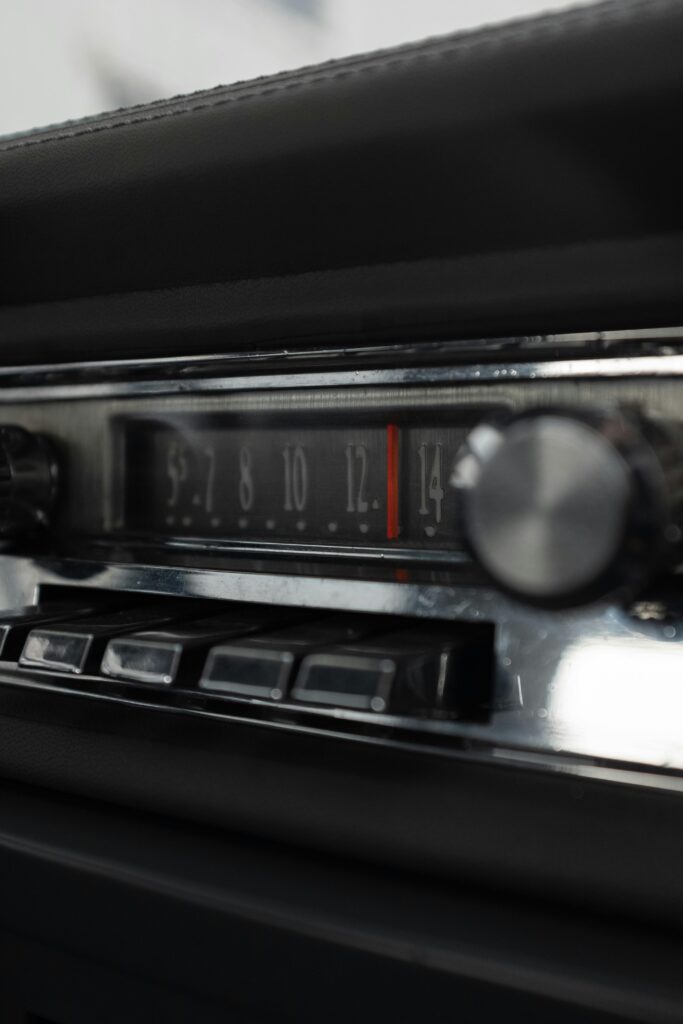
“Of course, son. I’m kidding. This is going to be great.” The old man turned his attention to the radio knobs, looking for his favorite talk station. He’d already pulled out one of the chrome buttons and pushed it back in, locking in the preset channel like he had previous experience. It was a forgotten art.
Looking over his shoulder, Kurt couldn’t believe that the DMV found that the ’79IMPALA’ vanity plate was available. He could hear the elevated, deep voices of vehement talk show hosts already booming from the speakers inside the car from one hundred feet away; that would be a problem. But not today.
Pops passed away the following spring. He’d managed to burn through three tanks of gasoline that winter but never once left the lot. He didn’t die inside the car, and for that, Kurt was thankful. He was also somewhat remorseful, for it would have been fitting.
His final conversation with staff was in the form of a complaint. Pop demanded that the dining crew stop refilling Harold’s milk glass because the opening day at Fenway was the following week.
Kurt gazed out the kitchen window into a backyard devoid of the old swing set. He had trimmed back the maples, too. The Impala fit inside the grass-faded footprint almost perfectly. It needed a tuneup; the intake was definitely carboned up from idling too much. With the windows down, he could comfortably listen to the Sox games from his cedar Adirondack chair beside the fire pit.
While several members of the homeowner’s association were stricken with the vapors, Kurt left their three certified letters unopened on the counter. He’d done his homework. It was only unregistered vehicles that were forbidden, and he planned an autumn trip to Virginia, maybe getting together with Stanley for lunch. He had already renewed his triple-A membership and knew a guy who could pack a dozen two-pounders so they arrived safely in Virginia.
Next Tuesday, Kurt planned to take Harold out for a coffee—no cream—of course.
Tim Cotton
September 2023
*Thanks for reading my stuff. Thanks to all the supporters of my blog through BuyMeACoffee. It means a lot to have your support. I hope you enjoyed “The Last Impala.”
From the Jagged Edge of America, I remain,
TC
A Dooryard Visit- A Downeast Primer
I didn’t meet Tin White by mistake. We were introduced, but not in an official sense.
Tin happens to live in my glide path to Downeast. I am lucky enough to drive by his house about fifty percent of the time I head to camp. There are other ways, of course. And I tend to mix it up.
Tina White, Tin’s daughter, suggested to Tin that he read some of my posts. Subsequently, he read one or two of my books. They seemed okay to him.
Then Tina asked if I might stop by sometime and surprise him. She said he enjoyed my writing and it would be neat for him to meet me.
It sounded good, but I am inherently shy. Sure, I pretend I’m not, but pulling into someone’s driveway without an official introduction can be rife with dark consequences. Tina assured me he was hopeful to have a meet-up, so I kept my eye on his driveway during my comings and goings. I promised her that if I caught Tin outside, I would pull in and have a chat.
Now, I know Tin’s lawn; it’s groomed magnificently. I also know what he drives for a lawnmower. One summer’s day last year, while driving by, I noticed Tin’s John Deere parked out front. I knew he kept it undercover in the barn; this was a good sign that he was out and about. I turned around, pulled in, and knocked on the door. Needless to say, Tin is a wonderful host. He invited me into the den, and we had a magnificent sit-down. I met his lovely wife, Lanie, and I stayed too long. Tin is full of good stories.
Since then, I discovered that Tin and I share the same birth month, only one day apart! His birth name is Wilbur, but he was pinned with Tin long ago. Of course, I inquired.
Tin has always been on the thin side, and that’s because he never stops moving. Since he was considered as light as a tin can, the name has been his for over eighty years and probably closer to ninety. You see, Tin is ninety-five.
Since then, Tin has attended at least one of my book signings, and I think he considers us friends. I certainly do.
That’s why, this past Friday, I pulled in for a dooryard visit. These are a New England staple, and they tend to be quick, unplanned events when you pull into a friend’s dooryard with no intention of going inside the house. They are aptly named.
Tin was mowing happily away with the idea he could beat the incoming hurricane. His lawn is several acres, an example of rich, green perfection. He had just unmired his mower from a wet spot high on the hillside but was undeterred from finishing up. I pulled up to the fence and waved him down.
As you can imagine, we had a wonderful time. I had no idea Tin rebuilt the barn in 1984. The house was his dad’s then. The barn had become too broken down to utilize, so a teardown was the only option.
That is until Tin took a six-week vacation from work to rebuild it into the straight, true, and sturdy structure that houses his beloved John Deere to this very day.
Each time I talk to Tin, I realize that I am in no way living up to the potential that’s expected of us. Tin is a pilot, war veteran, craftsman, wonderful husband, father, and friend. Tin is my friend. That’s the only reason I felt comfortable— unannounced— pulling up into his dooryard.
And now you know what a dooryard visit is all about.
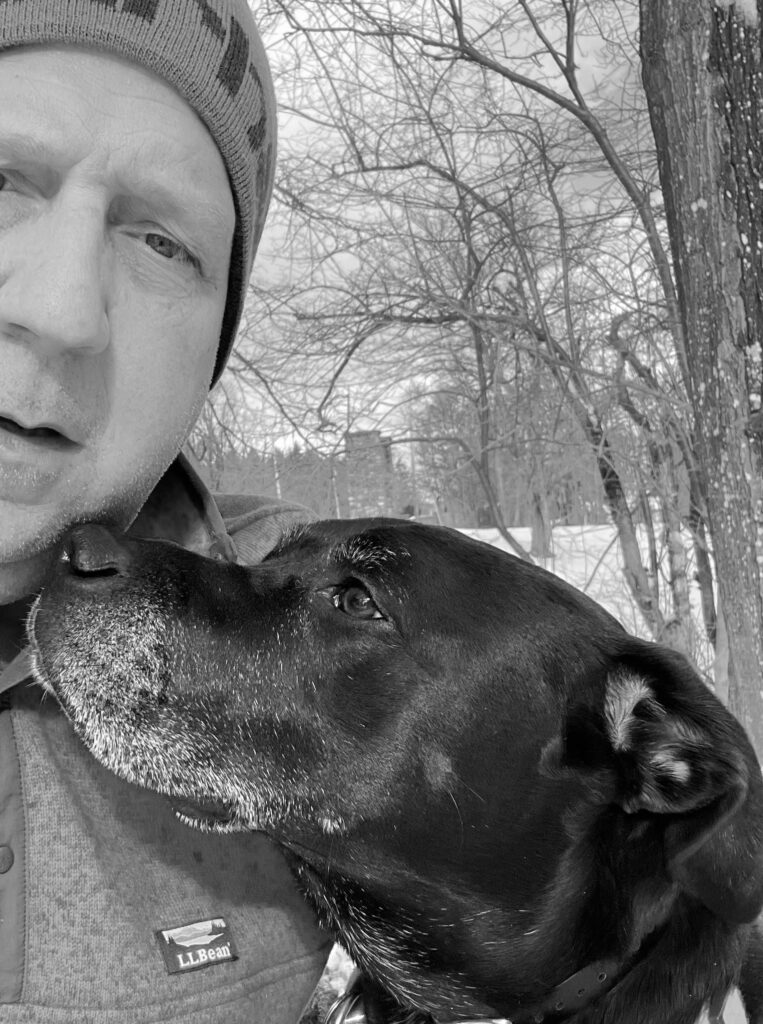
I am providing a photo of Tin, as he has the most beautiful smile and a darn good head of hair.
Tin’s my friend.
From the Jagged Edge of America, I remain,
TC
You Can Get There From Here
My early morning run to Portland was a welcome change from heading east. But I won’t make a habit of it. It cost me sixteen bucks to park.
Thankful is the man who parks for free; I have had a lifetime of that. So, I am not being a whiner. I detest giving my money away to someone much more intelligent than I am regarding land acquisition; props to them. It’s part of city life. It’s just that I am not integrated into that lifestyle.
My appreciation for my ho-hum existence overwhelms me from time to time. It started in Newport, Maine, when I wanted a coffee. Pulling into the slightly slumbering city on Sebasticook Lake, I changed my mind. I turned around at the Irving gas station to get right back into the southbound lane of I95.
The line for Dunkin coffee was backed up to Corinna; at least, it looked that way through my windshield. I wanted to use the facilities and grab a cuppa. I decided to swing into Topsham, seventy-one miles further to the south. I have an iron bladder; it comes from years of having other people control my time. It’s a mindset.
The exit in that fair city looked clogged from the commuter traffic backed up on the overpass. It’s their city, and I let them have it. I continued toward the Brunswick, Maine, exit. I knew of a fast-food joint where I could grab a hot cup before my podcast appointment at nine.
I pulled into America’s favorite arches, exited the car, and found the restroom clean and pleasant. With clean hands and an insatiable desire for caffeine (my second cup of the day), I walked to the front counter to find no humans. No humans besides the two waiting at the kiosk trying to input their order into the bright screens of the immobile lobby robots that have taken over for personal interaction with employees with an M on their chest.
The paper hats have been gone for a long time. I still have an indentation on my forehead from the proud way I wore mine. I digress.
The generic Gex Xer was having difficulty putting in his order. The Millenial behind him had reverted to using his phone’s app to make his order. Clever, those Millenials.
This Baby Boomer kept looking toward the counter to see if humans might arrive from the future or past to take my order—no such luck. I was on a tight schedule, so I left. I get frustrated with the technologies that take much more time than a human, even an inept and shy human-in-training, would.
It’s my beef; you don’t need to climb on the train with the Luddite, but I know I am correct. Sit next to me; we can run our mouths about how technology has worsened our lives. We can shout at each other and then go home and listen to Eight Tracks of Elvis or maybe Buck Owens. I think I have Earth, Wind & Fire’s “Volume 1” in a cardboard box around here, somewhere. “Let me take a look-see.”
I got to my appointment, did what I am known to do (talk way too much), and then hit the road with over an hour left on the meter. In my younger, more stubborn phase, I would have stayed if only to get my money’s worth.
I skipped the Interstate on the way home. I got off in Gardiner and headed right to the A-1 Diner. I needed a shot of nostalgia.
Of everything missing from my America, the aluminum pod of gravy and fries did not disappoint. Yes, I had meatloaf, mashed potato, and fresh spring greens. I was at a diner. I can get clams anywhere. I parked for free under the bridge.
When I went to the bathroom, one of the kitchen staff opened and held the door for me. He smiled and continued to drag on a well-deserved Marlboro. You see, to use the john at the A1, you must go outside to go back inside to get to the lavatory. I like that. There is no need for costly updates; “Deal with it, Chummy.”
That cook was outside, trying to cool off. It was an atrociously hot day in Maine. And air conditioning was not in the cards.
The thoughtful management closed the diner down because of that heat. I was the last one served, and no one tried to rush me. I read an actual newspaper and cleaned up my plate real, real good. I tried to be a thoughtful patron by skipping dessert as I knew the staff wanted to get out of there, but they didn’t let on. This mope was allowed to enjoy his meal. I paid cash.
With my faith in my fellow man renewed, I drove back to Bangor on the back roads. I passed Bolley’s Famous Franks and turned around in a used car lot just beyond. I recalled having some grand raspberry puff pastries in post-wiener meals of the past. They had seven in the display case; I bought three.
A pretty lady, clearly dealing with the kitchen’s heat, asked me if I wanted the rest of them.
“Look at me; I could eat all of them, but not today.” She smiled, and so did the Chef. He looked more impacted by the heat. But he smiled nonetheless.
“Is it hot enough for you? I don’t envy you today,” I said with a smile. He smirked again. He had the shaved head and the face of a guy who would be fun to be around while watching a football game. I could tell he had some jokes and quips I would appreciate hearing.
The hot dogs at Bolley’s are fried in peanut oil. It’s a place I frequented a lot in my days as a cop. We often had to go to Augusta, Maine, for autopsies, and we enjoyed hot dogs and French fries afterward. Don’t judge. The iron bladders were custom-ordered with iron stomachs and a short memory of what we had just stared at for an hour.
I hit the road via Rt 201 and passed beautiful China Lake and subsequent farms and homes that sprinkle the vast countryside of central Maine. The road has recently been paved, so the ride was terrific.
I pulled back into my driveway to find Ellie basking in the winds of the air conditioner. I put my pastries in the fridge and snoozed for a while. I took two pastries to my mom and dad in the late afternoon. They now live in a friendly community, holed up in a pleasant place in Bangor; I knew they would be open to taking some of the calories off my hands.
After a visit and no promises of how the raspberry puffs had traveled or kept, I motored home to dig around the Fridigaire for leftovers that would fulfill my desires. Finding none, I grabbed some Chinese cuisine. The shy young fellow at the register even knew how to make change.
Sometimes, you can get there from here. Don’t let anyone tell you anything different.
From the Jagged Edge of America, I appreciate the cooks and servers who make my life easier. Thanks!
Tim Cotton
*Thanks to all who support my writing through the BuyMeACoffee app. You are responsible for all this writing, even though you might not want to take credit for some of it.
TC
Anything You Want— Just Don’t Ask
Being a veteran Yankee trader, I have embraced—well, side-hugged Facebook Marketplace. I would much rather deal with Craigslist, as the users tend to be older like me.
The early years were spent pursuing one or two old motorcycles per year. I also bought cars, lots of them.
Please don’t mistake my old pastime as reserved for only the well-heeled; I had a sponsor.
My friend had a salvage yard. With his help, my hobby flourished. I’d grab a two-hundred-dollar bomb, clean it up, throw on some brakes, a muffler, and a quick interior vacuum; then I would drive it for a month. Soon, something a modicum nicer
would get hauled into his yard, and I’d sell the last big thing in order to upgrade. It was fun.
I called it trading up— the low-rent edition.
I’ve tallied up the number of cars I have owned. I know it was over eighty as of today. Most were junk, some were good, and many were mistakes. Like I said, I did it for the thrill of the chase.
My hobby was gutted after the Obama administration instituted the clunker buy-back program. I was sad.
Older, serviceable cars quadrupled in price. Dull-finished yet reliable automobiles, with lots of life left, were traded in at dealerships for ridiculous money. Most were crushed and recycled. It cleansed the world of a few of my favorite things.
Now, the junkyard folks will give you up to a grand for just the catalytic converter in some cars— and much more for specific models.
While my son was growing up, we chased many deals together. I would frequently tell him that the beauty of America and the dream we are living is that if a person puts their mind to it, they can have anything they want.
The catchall to that philosophy, I frequently pointed out, is that you can’t have everything you want. It’s an important footnote. And it’s a lesson I taught by buying and selling things with little value—or, at least, little value to some.
No one gets everything they want, and I don’t care who you are. Don’t ever plan on it. It’s an excellent way to keep a person’s expectations in line with the life they are preparing to experience.
I met a lot of very cool people in the trading game. Many of those folks are still my friends.
Things have changed. The Internet took away some of the benefits of face-to-face conversations—the kind that can reap friendships.
I still watch the for-sale ads: Facebook Marketplace, Craigslist, and some Maine-centric buy-and-sell sites. This piece of writing didn’t come about because I want to buy your car; I don’t.
I would merely like to complain about how the freshman and sophomore classes of buyers and sellers write up their ads.
The current craze is to intertwine the following phrase(s) in the description: “I won’t respond to questions about whether this item is still available,” “Don’t waste my time,” and “No lowballers.”
Naturally, as a longtime buyer of all sorts of things, my first question was always, do you still have this? It seems the most polite way to avoid wasting someone’s time. I also would inquire if the seller might take a little less. I like a bargain.
Facebook’s genius squad makes it even more difficult for the buyer because they pre-load your Marketplace experience with the question, “Is this still available?” Some folks hit that send button by mistake. It’s happened to me.
An ad should be inviting to the buyer. Something like, “I’ll answer all your questions; drop me a line!”
Outside of seeing a pristine, barn-find, panhead Harley for a lowball price, I won’t even inquire about ads in social media that have that phrase embedded.
If I can’t ask if you still have it, you should keep it.
I miss face-to-face relationship building. I miss polite conversations with people I didn’t know. I miss making an offer and having it turned down but walking away with a contact for future deals.
I guess I was wrong all along, and we will soon get everything we want. I’m beginning to believe that we deserve it.
Tim Cotton
August 2023
Thanks for stopping by for my blog posts. This blog and free reading spot will always remain open and available to everyone, and the folks who have made that possible need to be thanked. Thank you for your donations and ongoing support through the BuyMeACoffee app. You keep this train a runnin’.
From the Jagged Edge of America, I remain,
TC
Road vs. Air—A Non-Binding Commentary Regarding Travel, Fashion, and Comfort
I took a one-way flight to Columbus, Ohio. Borrowing some air travel points from the Significant One made it cheaper than dinner out, even if a party of two had a good slab of steak with something decadent for dessert.
Yes, I rode back to Maine with my boy. I rode shotgun. That was the plan all along. His over-the-road travel toward the corn and soybean belt led him to some small farms in upstate New York while shopping for the perfect used brush hog. He maintains big fields now, and they need a good mowing.
The moist surprise of a rainy summer has made the fields go cray-cray. I figured to get a few days of extra visitation with my old pal on his little farm while I waited for my ride.
The times were good. Sweet corn, picked one minute before boiling, might be the new candy in my life. I ate a lot. No, really. I did.
Sitting in airport terminals gives a man time to ponder while he wanders, and it’s as close as I’ll ever get to a fashion show.
What’s with the men’s suits? I understand the leaner look that the handsome boys seek. Form-fitting suits look good on anyone fit as a fiddle. However, why are capri-level pant hemlines en vogue?
While I have only paid attention to fashion trends during the chrome vs. blacked-out bumpers on pickup trucks debate, coupled with the fact that it was made clear to me through the magic of wedgie-threat technology that ‘highwater’ pants in school were going to get you ridiculed, I cannot sit here and write to you that I claim any fashion sense.
Heck, I still like plaids. And, no, it’s not because, for a time, it WAS fashionable. I just like plaid shirts—liked ’em as a kid, like ’em now. I wear jeans, khakis if my female fashion assistant makes demands.
Swearing off neckties as of June 2022 and tucking in only when I must wear a tie has made me more comfortable.
I tossed out most of my dress-up clothes by August of last year. I went to a high school where it was mandatory that boys wore ties, then I got the silly notion of becoming a cop. The line of work demanded either a uniform with a tie or a suit while dangling the unnecessary cloth accouterments from the neck; you get the picture—I’m out.
Men’s suits with short pant legs (and short socks), finished with more streamlined white sneakers, appeared to be the combo of choice for any man wearing Air Pods and a high-end wristwatch. I sat with one such male during one of my flights, but I’d seen dozens in the terminal.
I am not afraid to ask a question and was prepared to do so. I would have inquired about comfort, for I am not a worthy judge of fashionable or not. It just seems that with short pants, sitting will cause binding in the nether regions.
In church, as a kid, I noted that most men of substance would hike up their pantlegs just as they sat down after a few hymns. I realized in later years that this covert and quick move allows ample room for the “family” when seated. You can learn a lot in church.
My seatmate was handsome, and he spent a lot of time primping even as we flew. His haircut was impeccable, but not because it was cut short for ease of care; some gel was applied. I knew because I needed to cool down our row using the spin-to-open air vent, and his hairs didn’t move.
When seated, his summer-weight short suit pants shot upward from the ankle, revealing all the skin beneath his kneecaps, right down to the short socks. It appeared uncomfortable, and seeing this made me exceedingly self-aware about whether my pantlegs might be riding up over my ankles.
I raked them down repeatedly with awkward opposite-foot maneuvers, just in case. It’s the same move I used to knock the dust off the toes of my dress shoes before entering a job interview. No one will see the dust on the back of your pantlegs until you exit the room. Hopefully, by then, you’ve won them over.
There was no chatting with my co-passenger. The earphones were permanently installed, and he masked immediately upon his glutes hitting the seat. If I saw myself on the aisle seat, I’d mask too. Maybe he’s heard me speak. That would explain the headphones.
The message was clear. He didn’t want to talk to people, and—probably—most of all, to those of us who dress for comfort and not style. I respect that. Why tell someone you don’t conversate when you can show them?
As far as I could tell, his Rolex didn’t lose a second during our two hours together, but neither did my Seiko (it needs light to charge, but he closed his window shade for the whole flight). It felt like intentional watch-shaming, but I can be sensitive. The Seiko held up. Phew! It’s still ticking, as John Cameron Swayze might say.
I was forced to power up the overhead reading light to reveal the words on the yellowing pages of my musty-smelling novel. The odor of the dog-eared book mixed nicely with his cologne. I determined to hit the faded cover with a quick waxing of my Mennan Speed-Stick if I remembered to do so the next time I put some on. The book smells pretty bad, but it gave our travel pod a nice ambiance— sort of like my plaid.
I don’t want anyone’s skin touching me on an armrest—nope.
I work hard to keep my arms to myself during plane rides. I don’t want to be that guy. I mean, outside the plaid, but I also don’t want the hair on someone’s legs tickling my jeans if they are determined to man-spread.
Once that started, I pushed back a bit. We cleared up the confusion with a bit of manspreading of my own. Since I couldn’t compete with the watch (I’d really like one), I went with bulk created by bulkie rolls and not ten-pound, rubber-coated kettlebells.
It’s too bad. Sometimes I like to talk to people who are not like me. It opens one’s eyes to the possibilities. And I really wanted to know if those pants felt binding. Don’t get me wrong; I can hold an awkward conversation with zero guilt. Remember whom I have talked to for the last thirty years. I just didn’t get the chance.
I’ll never know now. I don’t wear suits, but if I did, I’d surely not be able to wear that cut. Truthfully, the man wisely used the tools at his disposal to build a wall between us. It’s safer to shut ourselves off. He probably feared too much banter; I’ve been there myself. It’s easier to build a wall than it is to install a window or a door. You can quote me.
When I returned to my most common means of travel—the road—I spoke to some pretty nice folks. A lady cleaning the men’s restroom in New Jersey and a trucker on a holdover in Massachusetts.
Jenny had her pylon sign just outside the busy men’s room. It said, “Caution—female attendant cleaning restroom.” I thought it was nice to enter with the warning in mind. I met her while I was washing my hands at the sink. She’s been there for years and said she always has used the sign. It’s not a new thing. I thanked her for the clean sink and urinal. She told me she appreciated being appreciated. She had no ear pods shoved into her hearing canals.
The trucker was missing his granddaughter’s birthday party in Iowa. He was on a holdover and couldn’t unload his freight until Monday. We talked for a few minutes, sipped our coffee, and commiserated. He was wearing a plaid shirt, and we both like coffee.
I’ll take the road over air travel when it comes down to it. It’s easier to connect.
Talking through a window is more accessible than yelling through a wall. Plaid seems more acceptable on the road, and there are no questions about comfort.
Be well. Thanks for BuyMeACoffee support and all who just stopped by to read my words. It means a lot.
From the jagged edge of America, I remain,
TC