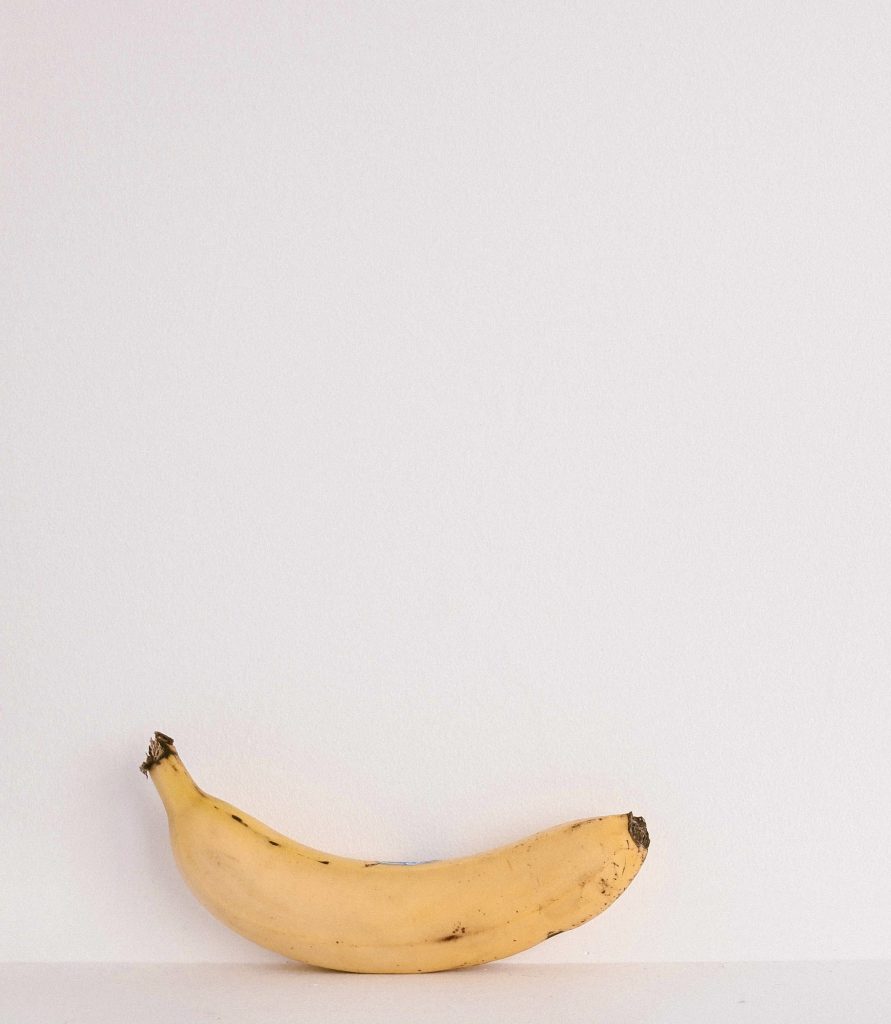
One Banana—
My grocery cart was half full, and I’d only stopped in for a few things.
She was in front of me. And she, too, had a cart, but her entire larder was contained in the fold-down children’s seat. The wire cavernous space in front was empty. I won’t list her items individually, but it wouldn’t take more than one sentence and very few commas to share her order. She placed the items on the counter, turned around, and smiled.
What initially drew my attention was how she surveyed my selections before grabbing the separation stick, colorfully emblazoned with the grocer’s name, and placing it down on the conveyor so I could unload my stuff without it intermingling with hers.
But she wasn’t judging me; she was wishing her basket was as full as mine. I knew that in an instant. Sometimes, you just know.
I’d splurged. I hate grocery shopping, but I’d finished my last can of tuna, the quarter loaf of bread in the refrigerator was showing signs of being there far too long, and I’d finished all the cans of Campbell’s Chunky soup that I save for those days when I don’t feel like going shopping again.
Don’t get me wrong, I have more than enough food, and I don’t miss meals.
When I buy bananas, I grab a whole bunch, never counting them or thinking I’ll finish them all. I am not only blessed, but I can also be wasteful. I am a dichotomy of humanness. Sorry, Lord.
This week I bought oranges for the fruit basket on my counter.
Her order contained one banana; one. A single, yellow banana, still at the edge of the ripeness we all hope to catch just before it goes brown.
She had four hamburgers, pre-made beef patties, and I knew in my heart that they were going to need to last for more than the next four days.
I am a pretty observant individual. You might think it’s because I was a cop, and that’s what we are supposed to do. But you are wrong.
I am observant because of my parents. I watched them, of course. But I listened to them far more. And that’s why a lone banana is the star of this story.
I once watched my father take off a brand new shirt in the church vestry, then hand it to a man who complimented him on the shade of blue. My Dad put his worn, blue blazer back on over his white T-shirt, and kept shaking hands with parishioners leaving after the service. The man, who clearly had very little in his life and an even smaller wardrobe, walked out smiling. It confused me at the time, but it doesn’t anymore.
I am also a product of relentless giving; I ate most of my meals based on my father’s salary. And my father’s salary came from a meager weekly wage based on what others put in the offering basket at the tiny churches where he preached.
So, growing up and hearing the stories about how television ministers were grifting the world by asking for money for this project or that, I knew breakfast, lunch, and dinner at my house came from the kind offerings and tithes of families who felt led to support the church, and subsequently, my appetite. They might not have seen it that way, but I did.
I personally knew a minister without a plane or a Cadillac. I knew my Dad.
I couldn’t even comprehend what people saw on television, often standing in the presence of conversations based on the prevailing theme that they didn’t go to church because churches were filled with hypocrites.
I was just a boy, so I remained quiet, figuring they disliked my Dad because he had the same job as the people they were complaining about.
My experience was far removed from theirs, because I watched a different display, a different show, mostly from the back pew. But only if my mother would let me sit behind her. I needed to be monitored; I was a typical boy, a PK.
Frankly, a lot of older ladies, many picked up by my father on snowy days so they could get to church, most on meager pensions, kept my bones healthy, clothed me, and provided new sneakers each summer as my feet expanded and I grew taller. Of course, they were giving offerings to keep the church heated and the lights on, but they fed me, too, in a roundabout way.
And that’s what I thought about, for what seemed like an eternity, until the lone banana was rung up by the cashier: sixteen cents.
The clerk mumbled the total of the order, maybe thirty-five bucks, but not a whole bag for sure. I waved to get his attention, trying not to alarm anyone.
“I got this, put it on mine.”
Confusion ensued. “What’s that?” he said.
“Just combine her order with mine, please?”
“Oh, okay. You sure?”
“Yes.”
The lady turned around, also confused. “Thank you, sir, but you don’t have to do that.”
“I know. I want to. Have a great weekend,” I said. Trying to keep my voice low so we could all go about our business.
That didn’t work.
“I’ve seen this on television before. I feel so blessed. I never thought it would happen to me.”
I whisper-shouted, “It’s all good. On television, it’s usually a lot more than a few groceries. You are welcome,” hoping this could just be done and she’d feel a little of what I felt so many times. And she did, I know.
“What’s your name?”
This was the part I was trying to avoid.
“Tim.”
“You look familiar. I don’t know why.”
I’ve got one of those faces. What’s your name?”
She told me. I shook her tiny hand. “So nice to meet you,” I said as quietly as my voice could be.
She turned to the bagger. “It couldn’t have happened at a better time.”
The boy, maybe seventeen, unimpressed (understandably) by the meager display of the purchase of a banana and a few other staples, just shook his head up and down and smiled.
When I heard her blurt out that last sentence, I knew that I was right about everything I’d observed. All because of that single, lonely banana.
It was 16 cents, but it bought a whole lot of memories of older ladies that smelled like garlic-riddled chicken stew, riding in the front seat of our Chevy wagon, their wool coats covered in cat hair, and my sisters and I incensed by the fact that we had to take time out of our day so our father could drop them off at walk-up apartments on drab side streets in Bangor, Maine.
The lady left, smiling. That was cooler than all the rest of this. It cost me so little that I simply wished her order was bigger.
The cashier said, “I don’t see that very often. It was cool. Thank you for doing that.” He meant it, clearly delighted, and probably the son of someone other than a small-town preacher.
“I wish I did it more often,” I said, paying the tab and trying to get out of the store without any more low-key fanfare.
He just nodded and smiled. And so did I.
One banana.
Keep your hands to yourself, leave other people’s things alone, and be kind to one another.
On a rainy weekend from the Jagged Edge of America, I remain,
TC
Thank you, all, for reading the stuff here and on the Facebooks. Thanks to the folks who keep the train running through BuyMeACoffee, purchasing the books, the shirts, and whatever else we come up with. TC